
The UK environmental horticulture sector supported over 720,000 jobs in 2023, demonstrating the power of the garden industry. With 80% of UK adults having access to a home garden and an estimated 27 million enjoying gardening as a hobby, Britain’s obsession with green spaces has arguably never been greater.
But how big is the UK garden industry? To find out more, Hillarys compiled the most compelling garden industry statistics for 2025, looking at market data, the average garden size in the UK, and garden centre stats
Top 10 must‑know garden industry statistics 2025
- The environmental horticulture sector contributed £38 billion to UK GDP in 2023 and is projected to surpass £51 billion by 2030.
- Most of the GDP generated by environmental horticulture in the UK comes from England (£25.9 billion).
- Landscaping services are the largest subsector of the UK environmental horticulture industry, contributing £17.9 billion to GDP in 2023.
- The environmental horticulture industry is projected to support 763,000 UK jobs by 2030.
- 43 million UK adults had access to a private garden, accounting for around 78% of the population.
- 38% of UK gardeners use their garden to grow fruit, veg, or herbs.
- North Lanarkshire was found to be the tidiest place for gardens, with just 22 council complaints about messy gardens between 2020 and 2024.
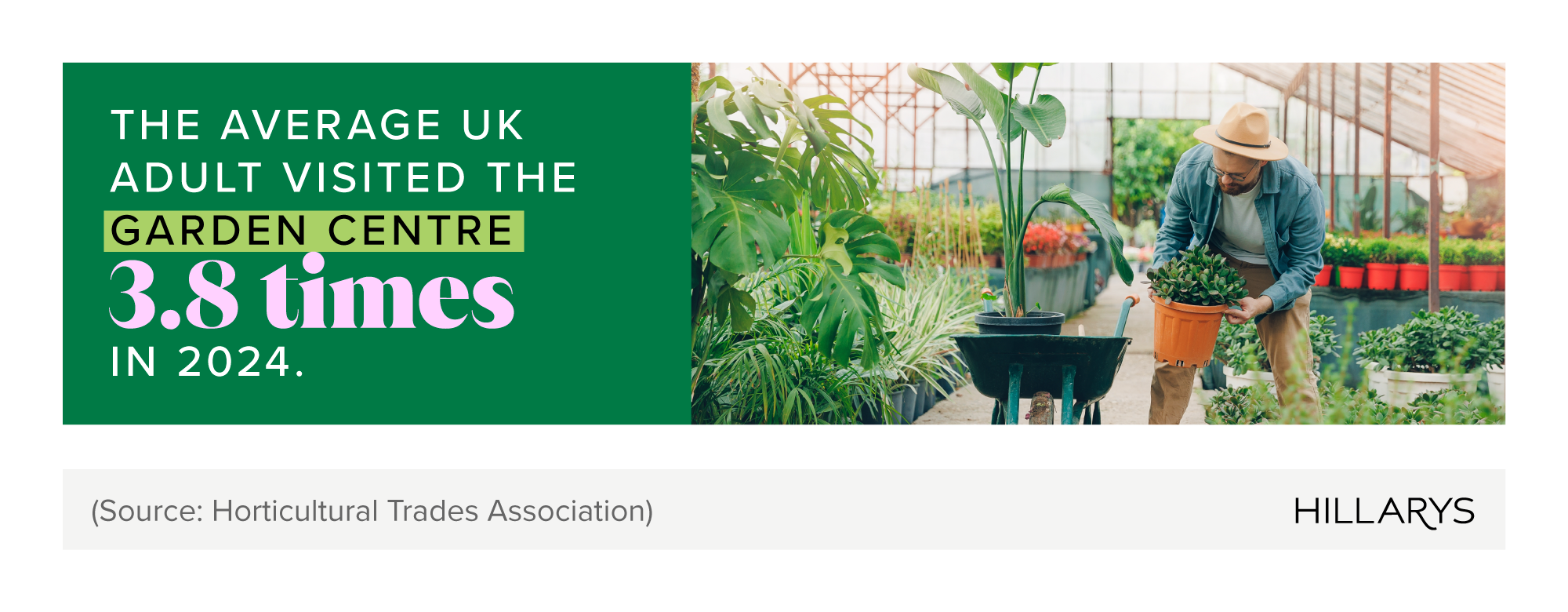
- The average UK resident visited a garden centre 3.8 times in 2024.
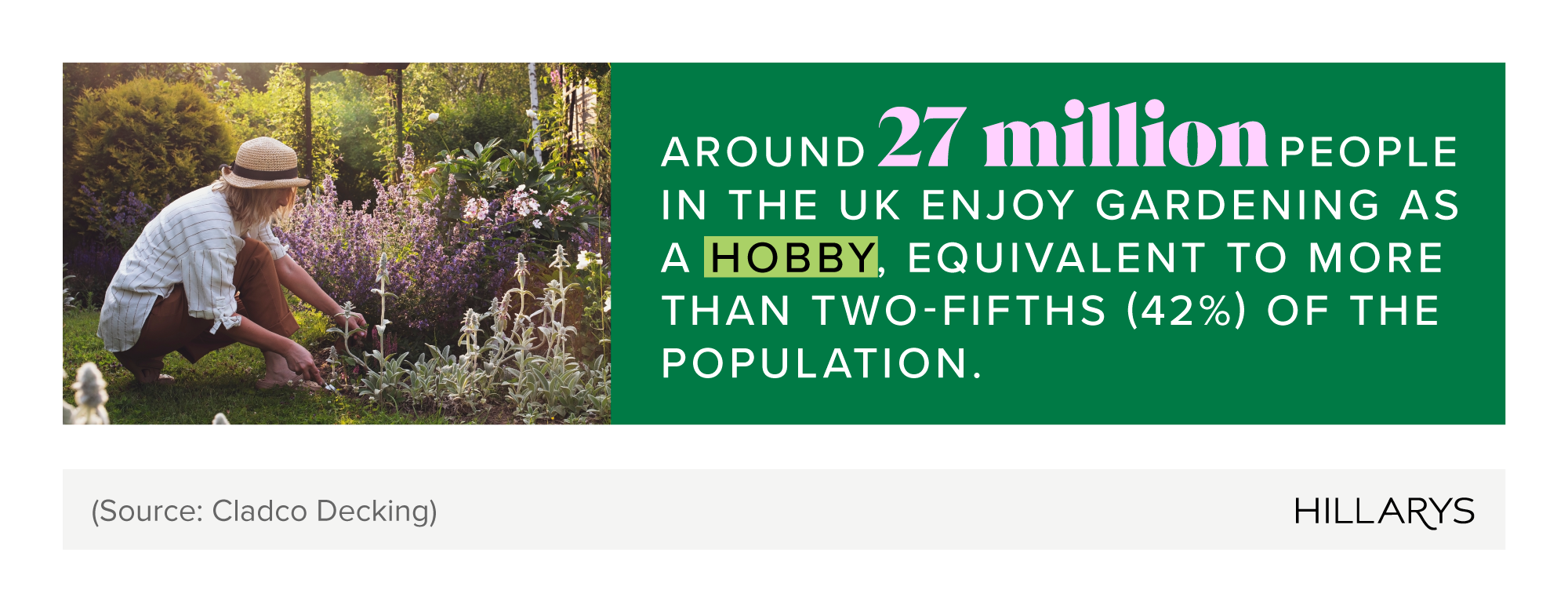
- Around 27 million people in the UK enjoy gardening as a hobby – equal to 42% of the population.
- The average garden size in the UK is 14 m2.
UK gardening market statistics
Recent garden industry statistics found that the environmental horticulture sector contributed £38 billion to UK GDP in 2023, equivalent to £1 for every £71 of economic output. At the same time, the industry also generated £8.5 billion in tax revenue.
Total GDP and tax revenue from environmental horticulture in the UK, 2023-30
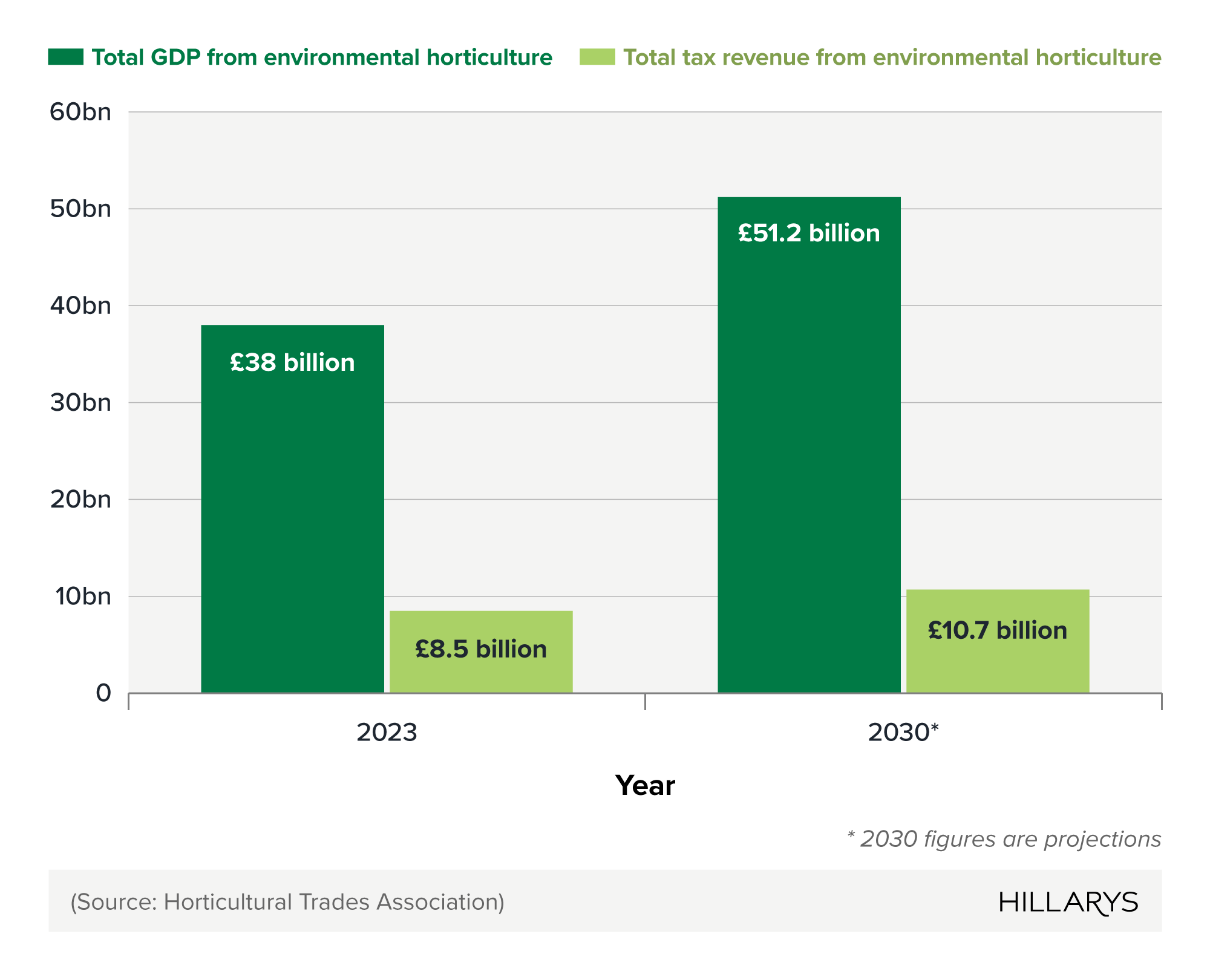
Industry growth looks set to continue throughout the 2020s, with GDP contributions projected to surpass £51 billion by 2030. If correct, then the total GDP from environmental horticulture will increase by 35% between 2023 and 2030.
Tax revenue is also projected to grow, reaching £10.7 billion by 2030 – a seven-year rise of 26%.
Aside from environmental horticulture, the UK landscaping services industry was valued at £6.8 billion in 2023 – up 5.5% from 2022. Additionally, a report from Corker found that an average of £2.4 billion per year is spent on landscaping and gardening services in the UK.
Garden industry GDP by UK country
The vast majority of the UK GDP generated by environmental horticulture comes from England, with contributions of just under £26 billion. This is over nine times more than any other UK country, with Scotland the only other with GDP contributions of more than £2 billion.
Garden industry revenue by UK country, 2023
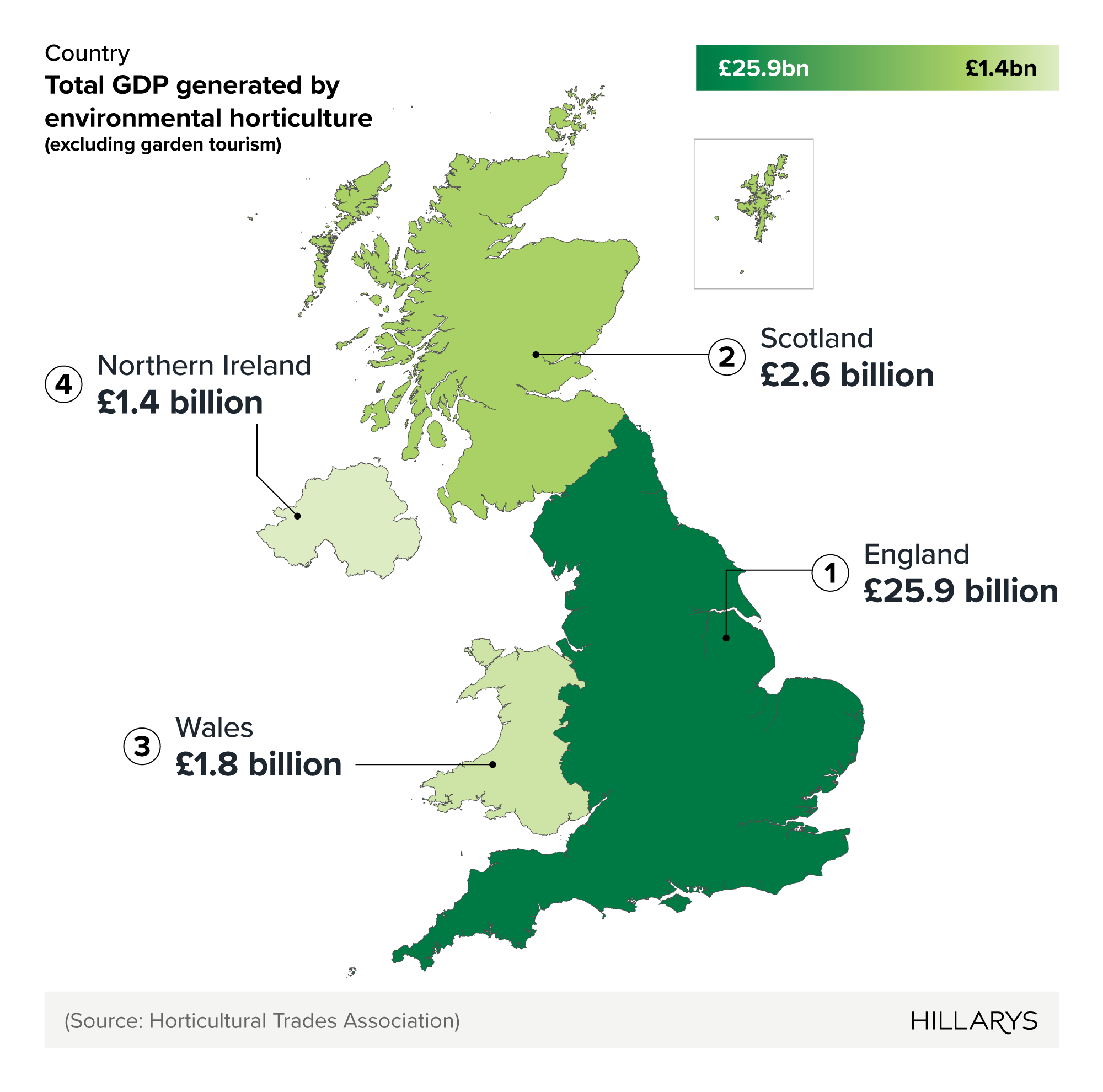
Wales had the next highest contributions, at £1.8 billion. While this is around 29% higher than Northern Ireland, it’s nearly a third (31%) lower than Scotland’s GDP contributions from environmental horticulture and over 18 times less than England’s.
What parts of the garden industry contribute most to the UK economy?
Landscaping services are the largest subsector of the UK environmental horticulture industry, contributing £17.9 billion to UK GDP in 2023. This is more than double the total of any other subsector, making landscaping services responsible for around 47% of the industry total.
The gardening industry subsectors with the biggest contribution to UK GDP, 2023
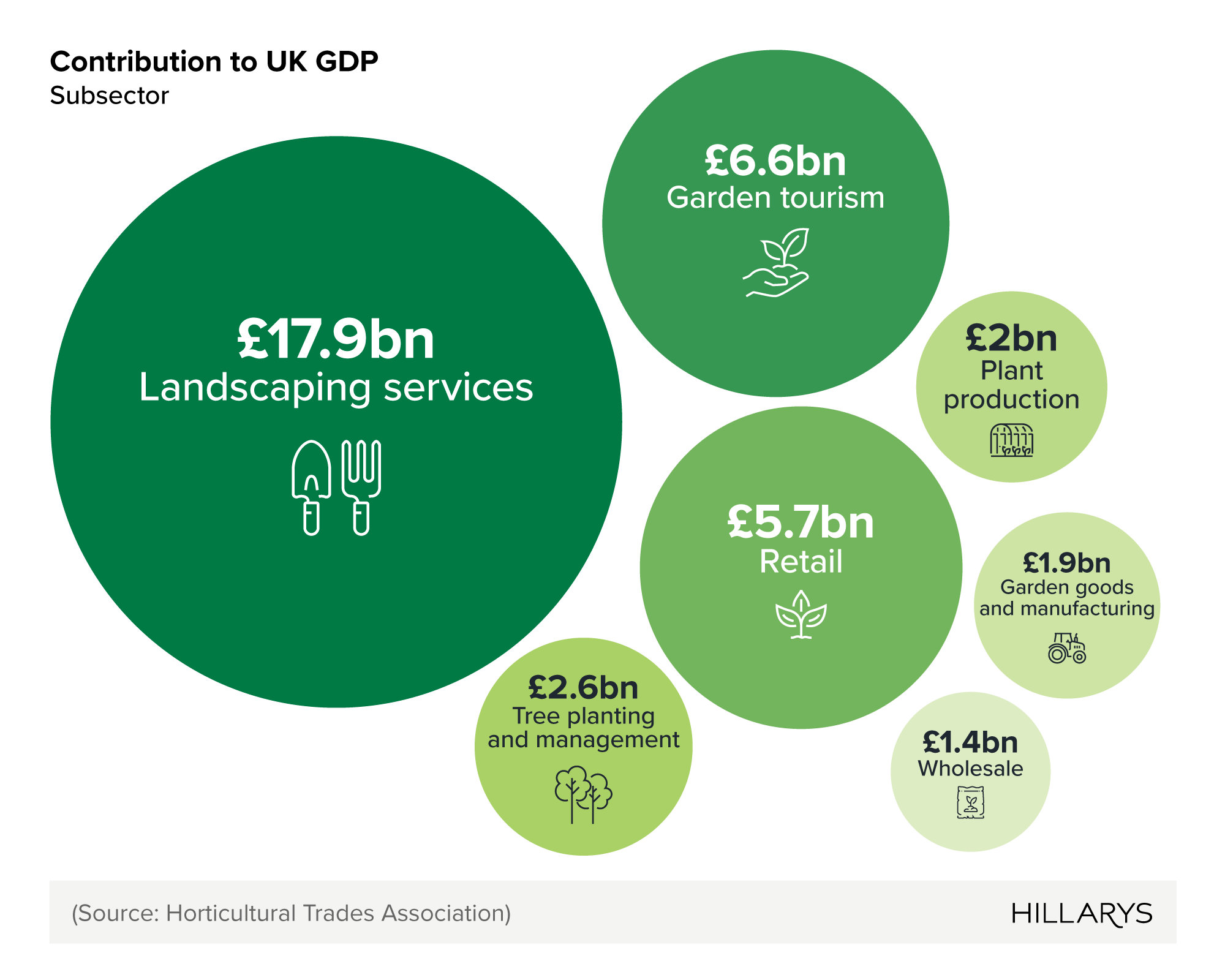
Garden tourism had the next highest GDP contributions, at £6.6 billion, around 16% more than retail. Nevertheless, retail’s total of £5.7 billion was more than double the total of the remaining subsectors, accounting for 15% of total industry GDP contributions.
At the other end of the scale, wholesale was responsible for £1.4 billion of UK GDP in 2023, over 12 times less than landscaping services.
UK garden industry employment statistics
Garden industry statistics revealed that the environmental horticulture industry supported 722,000 UK jobs in 2023. By 2030, it’s estimated that this total could reach 763,000, marking a seven-year rise of around 6%.
Total employment in the environmental horticulture industry by UK country, 2023
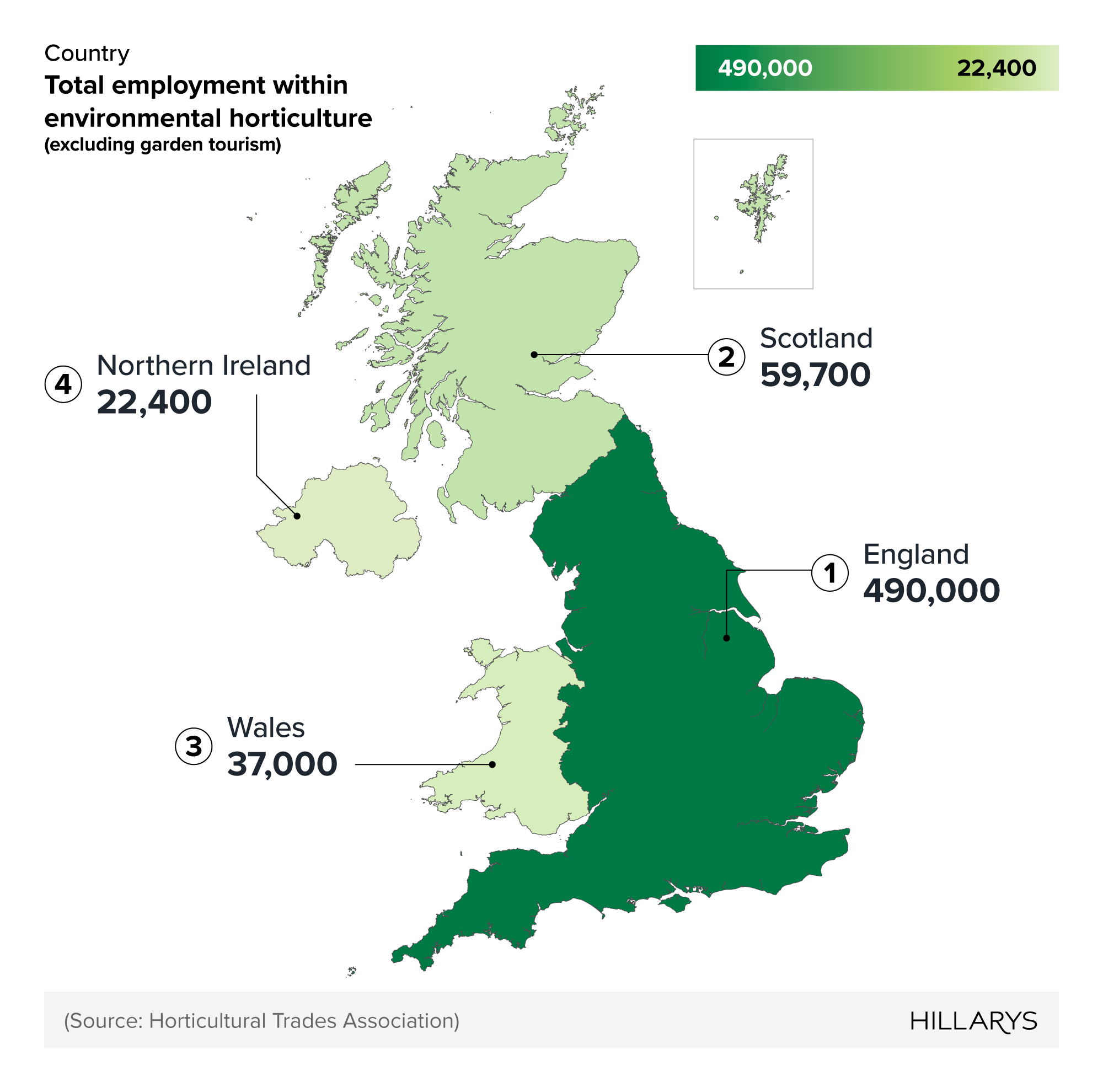
England is responsible for by far the highest portion of environmental horticulture employment in the UK, employing 490,000 people within the sector (excluding tourism). This is more than eight times more than any other country.
Scotland had the next highest total, at 59,700, around 61% more than Wales and over double the total of Northern Ireland.
Garden industry employment by subsector
Landscaping services are the biggest subsector for environmental horticulture employment in the UK, contributing over 235,000 jobs. This is over three times more than any other subsector, meaning landscaping services provide around a third of all environmental horticulture jobs in the UK.
Total UK employment in the garden industry by subsector, 2023
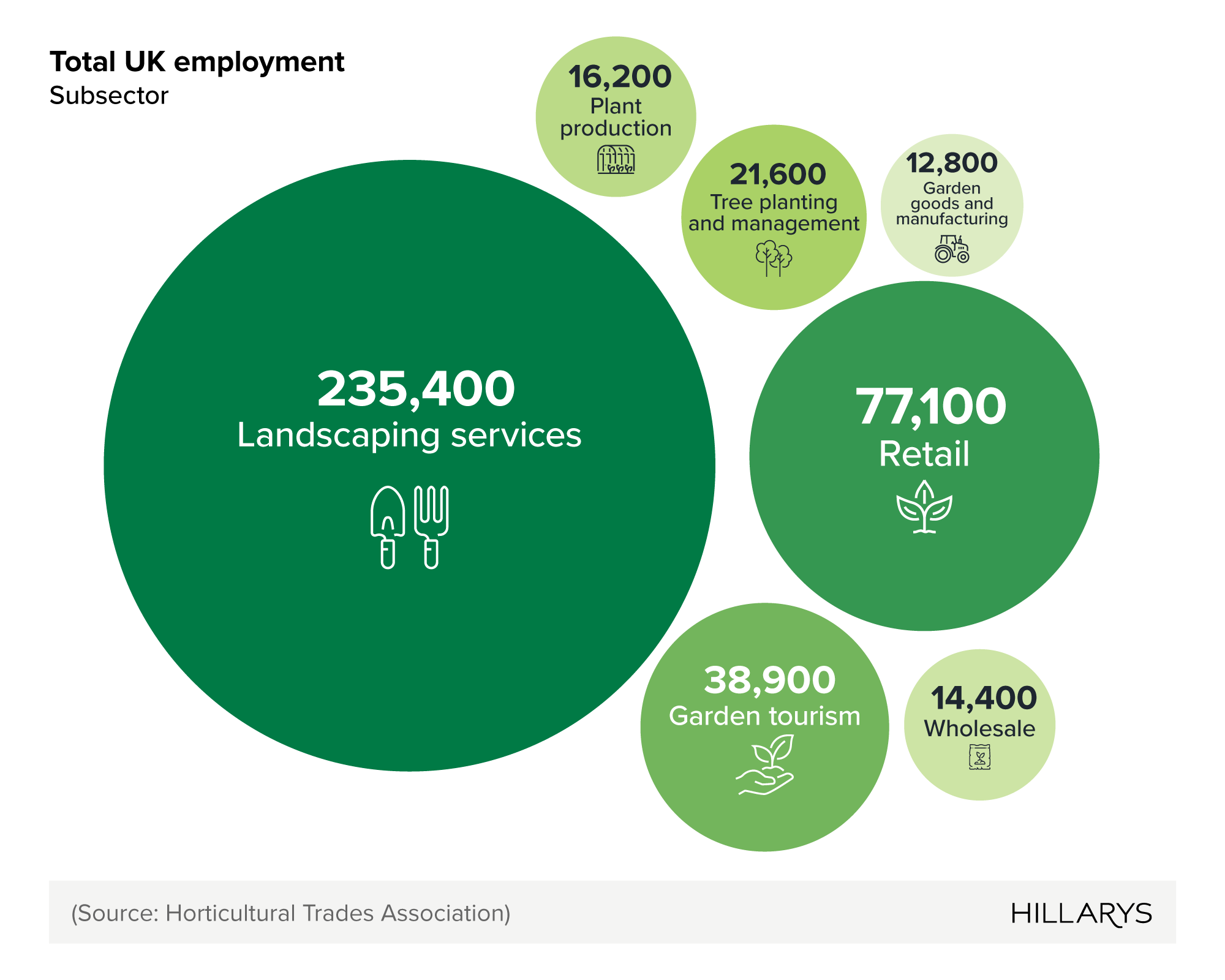
Retail had the next highest number of employees, at just over 77,000. This was nearly double the total of third-placed garden tourism, making it the final subsector to provide more than 50,000 jobs.
At the other end of the scale, there were 12,800 jobs in the garden goods and manufacturing subsector – over seven times fewer than in retail.
Home garden statistics
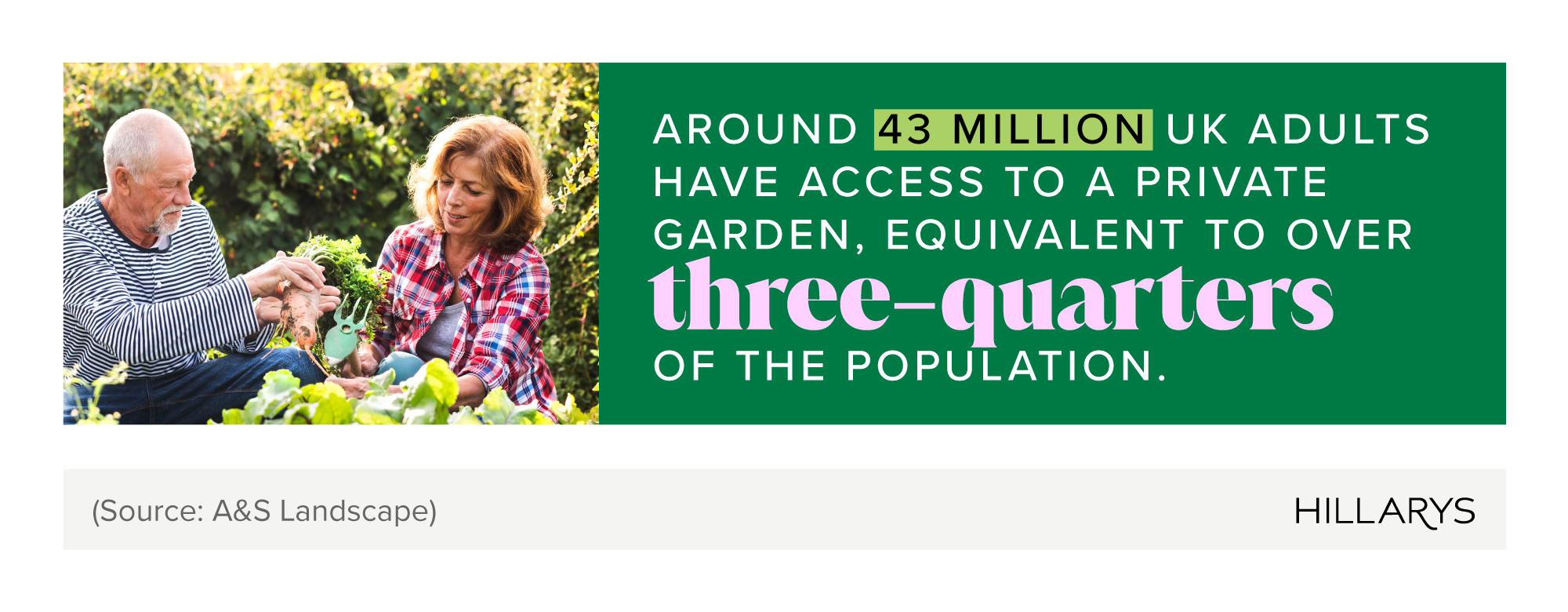
Recent garden industry statistics found that 43 million UK adults had access to a private garden, equal to around 78% of the population.
Home gardens are used for a variety of different purposes, with Corker reporting that nearly two-fifths (34%) of UK gardeners use their garden to grow fruit, veg, or herbs, and over half to watch or feed wildlife.
The report also found that:
- Just under half (49%) have roses in their gardens.
- 43% use their outdoor spaces or garden for entertaining guests.
- Around a quarter (23%) of families with gardens use them as a designated play area.
Despite the many social and practical functions of home gardens, leisure remains one of the most popular uses, with 77% of people with gardens using them as a space to relax.
What is the average garden size in the UK?
The average garden size in the UK is 14m2, with those aged 45 or older typically having slightly larger spaces of 15m2. Those aged between 25 and 44 tend to have slightly smaller gardens, with average sizes of 12m2.
What are the most common items included in home gardens?
Flowers and plants are the most common items included in UK home gardens, with nearly four out of five (78%) featuring flowers or plants of some kind.
This was eight percentage points more than the number of gardens with furniture, and 10 more than those containing real grass.
The most common items included in UK home gardens
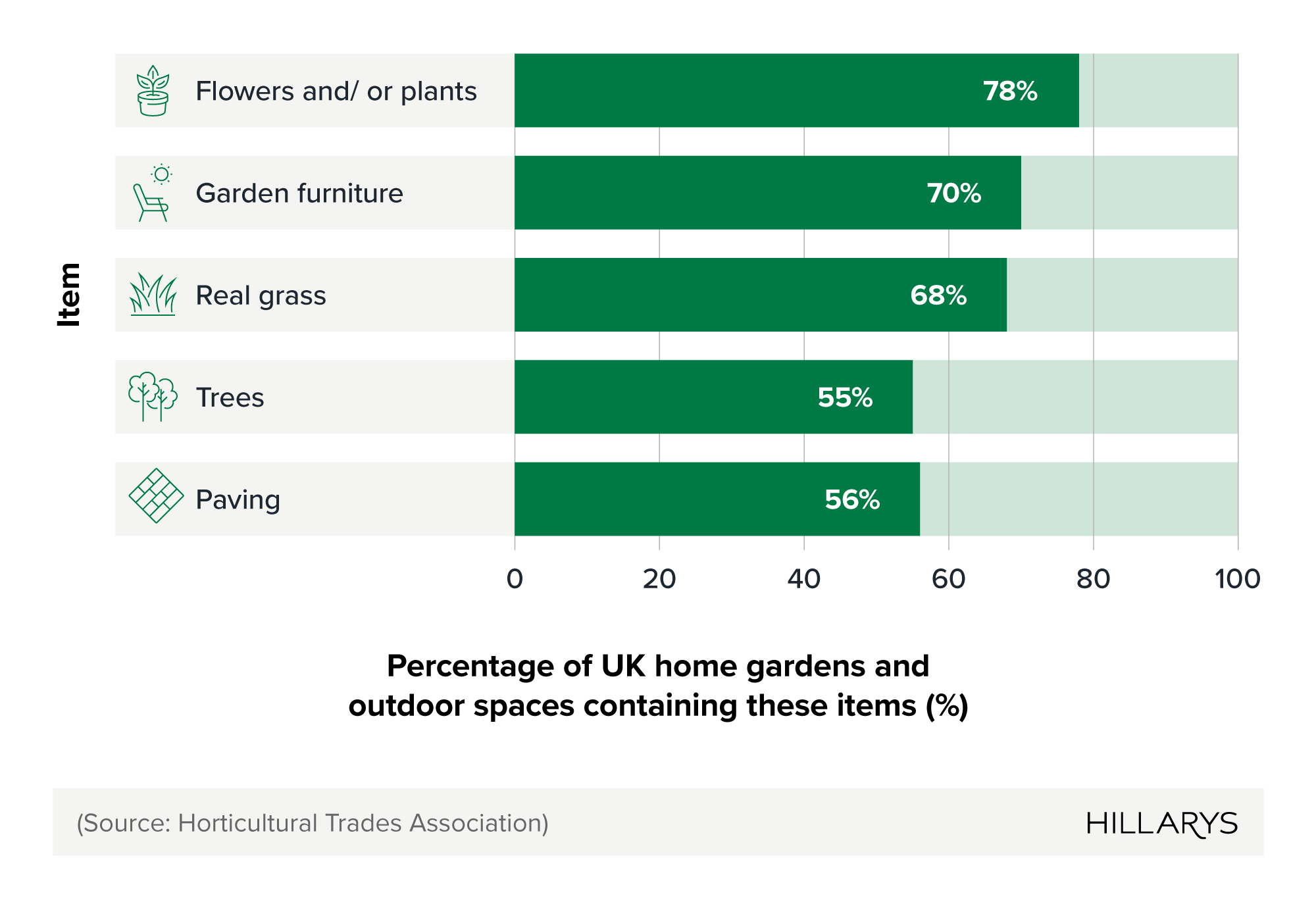
Garden industry statistics found that 56% of domestic gardens had some level of paving. While this is slightly more than the percentage with trees (55%), it is 22 percentage points fewer than the number with flowers or plants.
The UK's tidiest gardens
In a bid to find out which places in the UK had the tidiest gardens, Hillarys analysed the total number of recorded complaints about garden areas for each council area in the UK.
Westminster was found to be the tidiest place for gardens, with just 21 council complaints lodged about garden tidiness or cleanliness between 2020 and 2024. This was narrowly less than North Lanarkshire (22) and Portsmouth (24), which had the second and third lowest complaints, respectively.
The 10 council areas with the lowest number of garden complaints, 2020-2024
| Rank | Council area | Total garden complaints (2020–2024) |
|---|---|---|
| 1 | City of Westminster Council | 21 |
| 2 | North Lanarkshire Council | 22 |
| 3 | Portsmouth City Council | 24 |
| 4 | Wolverhampton City Council | 25 |
| 5 | East Suffolk Council | 29 |
| 6 | London Borough of Lewisham | 33 |
| 7 | Cheshire West and Chester Council | 45 |
| 8 | Dudley Metropolitan Borough Council | 65 |
| 9 | Dorset Council | 92 |
| 10 | London Borough of Greenwich | 148 |
Ninth-placed Dorset was the final council to receive fewer than 100 complaints, with 92 recorded between 2020 and 2024. While this was over 50 fewer than 10th-placed Greenwich, it was over four times more than both Westminster and North Lanarkshire.
The South of England is responsible for 60% of the places with the tidiest gardens, with 20% in the Midlands, and 10% each coming from the North and Scotland.
The 10 council areas with the highest number of garden complaints, 2020-2024
| Rank | Council area | Total garden complaints (2020–2024) |
|---|---|---|
| 1 | Bradford City Council | 9,177 |
| 2 | London Borough of Barking and Dagenham | 8,827 |
| 3 | Barnsley Metropolitan Borough Council | 5,883 |
| 4 | Rotherham Metropolitan Borough Council | 5,684 |
| 5 | Wigan Council | 5,353 |
| 6 | Leeds City Council | 4,989 |
| 7 | Oldham Council | 4,858 |
| 8 | London Borough of Newham | 4,756 |
| 9 | Kirklees Council | 4,132 |
| 10 | Bolton Council | 3,545 |
With over 9,000 garden-related council complaints between 2020 and 2024, Bradford tops our list as the place with the UK’s messiest gardens. The West Yorkshire city lodged just over 300 more complaints than second-placed Barking and Dagenham, which was the only other council area to receive more than 6,000 complaints.
Barnsley had the next highest number of complaints, with its total of 5,883, around 4% more than fourth-placed Rotherham and 10% more than Wigan in fifth.
The north of England dominates the list, responsible for 80% of the top 10 and four of the top five. Yorkshire in particular has a strong presence, with 50% of the list from the region.
Garden centre statistics
Garden centres are big business in the UK, with the garden centre and pet shop industry valued at £6.5 billion in 2024. At the same time, there were nearly 7,400 businesses within the sector.
Three-fifths of UK-produced plants are sold through garden centres, highlighting the UK horticulture industry’s reliance on these businesses. Garden centres also play a significant role in the wider UK economy, with The New Statesman reporting that one in 62 UK jobs was reliant on garden centres in 2020. With jobs projected to increase, this figure may be substantially higher by 2030.
Recent garden industry statistics from the Horticultural Trades Association estimated that UK garden centre visits reached 203 million in 2024, with over two-thirds (68%) of adults saying they visited a garden centre at least once that year.
The average UK resident who visited a garden centre in 2024 did so 5.3 times throughout the year. Even when including non-visitors, the average annual garden centre visits per person stood at 3.8.
Garden centre cafe and restaurant statistics
Cafes and restaurants play a significant role in the popularity of garden centres, with estimated visits of 148 million in 2024. Additionally, more than half (56%) of all UK adults were found to have visited a garden centre cafe or restaurant that year.
This meant that every adult who visited a garden centre that year visited the cafe or restaurant an average of 4.7 times. Even when accounting for non-garden centre visitors, the average annual number of garden centre cafe or restaurant trips in the UK stood at 2.8 per adult.
The importance of cafes and restaurants to the wider industry was highlighted by The New Statesman, which revealed that a fifth of UK garden centre sales come from in-house cafes and restaurants.
UK gardener statistics
Recent gardening statistics revealed that approximately 27 million people in the UK enjoy gardening as a hobby, equating to 42% of the population. For many, this hobby can become a profession, with an estimated 144,400 professional gardeners and landscape gardeners in the UK in 2022.
A report from Cladco Decking found that the average home gardener dedicates around two hours per week (or 114 hours per year) to taking care of their garden.
Gardening is a passion split evenly among genders, with 35% of men reporting being the primary gardeners in their homes in 2020, compared to 33% of women.
Which age group enjoys gardening the most?
Those aged 55 and above are the keenest gardeners, with over half (51.42%) of surveyed individuals in this age group saying they ‘loved to garden’. This was 10 percentage points more than any other age group, with just over 41% of 41-54-year-olds describing themselves as gardening lovers.
This could be down to numerous factors, with older people more likely to be retired and have fewer working responsibilities, allowing them more time to dedicate to garden ideas and developing their outdoor space.
Though 16-24 year olds had the least amount of gardening enthusiasts, their score of 31.2% still suggests considerable interest among the younger age groups.
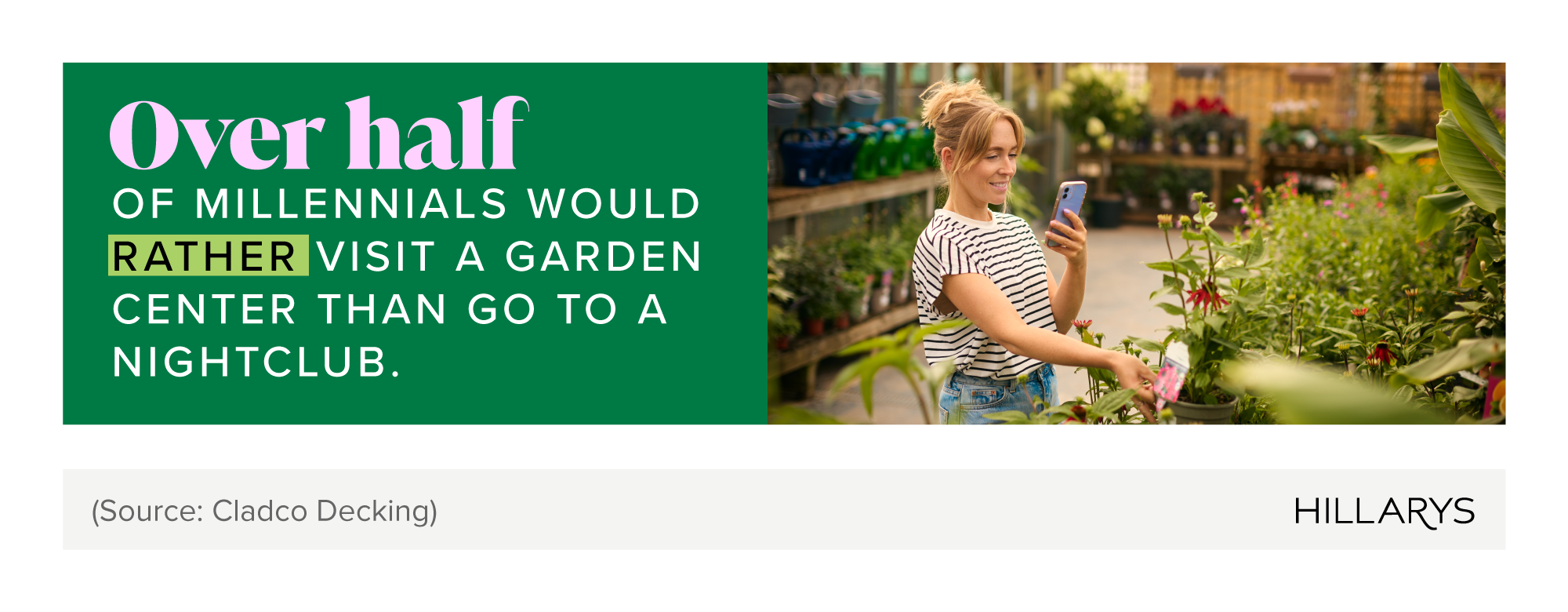
This is further validated by statistics from Cladco Decking, which found three-quarters of millennials claiming they enjoy gardening and 83% regarding it as ‘cool’. What’s more, over half of millennials claimed they would prefer a trip to the garden centre over a night out clubbing.
Benefits of gardening
The benefits of gardening are more than just anecdotal, with many statistics providing evidence to support the physical, mental, social, and environmental advantages. On average, 200 calories are burned from 30 minutes of gardening, while natural greenery has been shown to boost office productivity by 15%.
Studies have shown that exposure to plants can boost happiness, concentration, and productivity, with one study linking daily gardening with a 36% lower risk of developing dementia for those over 60.
Environmental horticulture is a net positive for the environment and the economy, generating 1.7% of the UK’s GDP while being responsible for just 0.63% of the CO2 emissions. As such, it’s no surprise that residential gardens make up nearly 30% of the UK's urban areas.
Additionally, increasing inner-city tree coverage from 11% to 30% was found to lower temperatures by an average of 0.4°C, and, in some cases, by more than 5°C.
Attitudes towards gardening
Three-quarters (75%) of surveyed consumers feel that environmental horticulture benefits the nation's health and well-being, with this number rising to 78% among MPs. This made health and well-being the most commonly cited benefit among both consumers and MPs.
The most common benefits of environmental horticulture cited by MPs and consumers, 2023
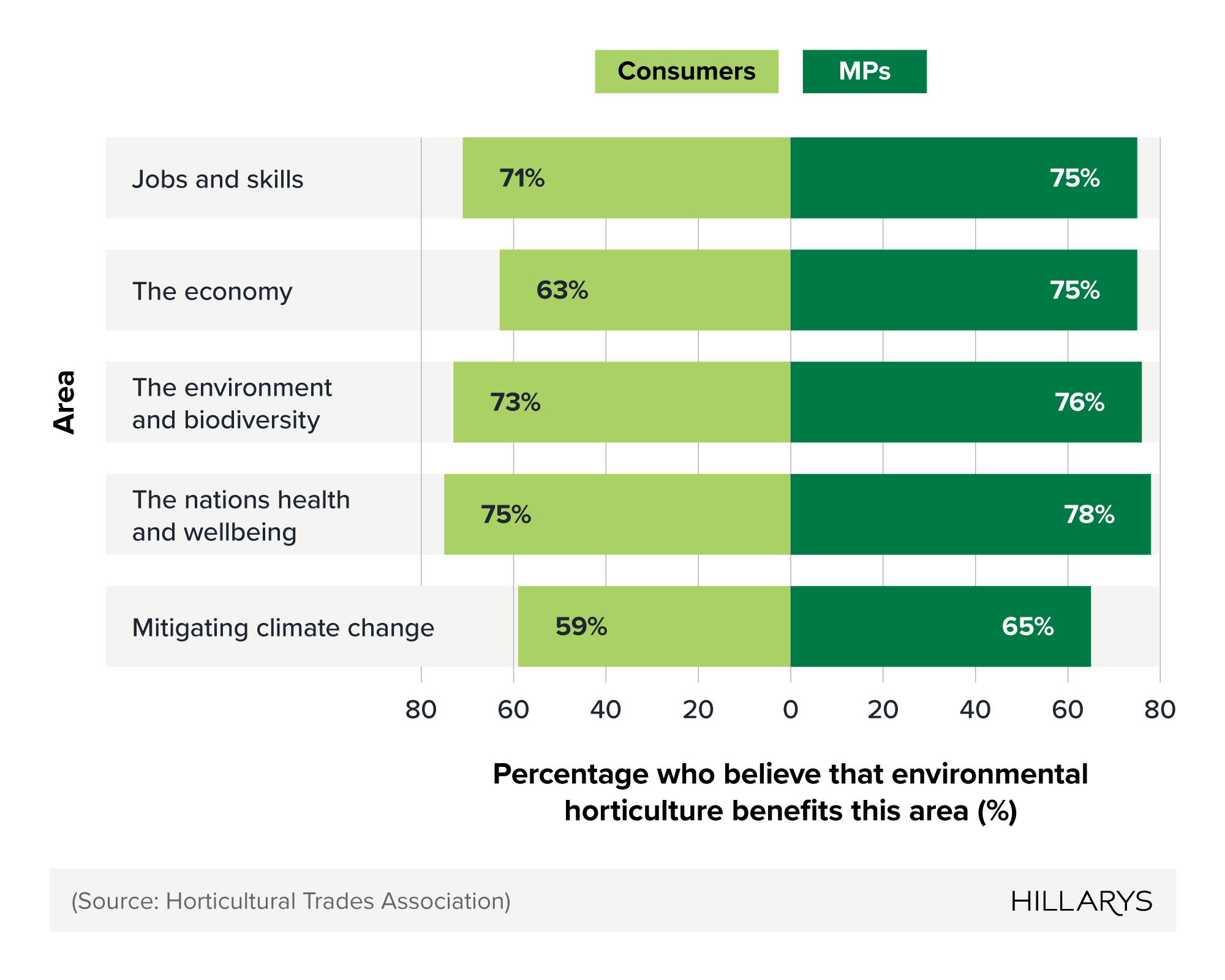
Just over three-quarters (76%) of MPs cited the environment and biodiversity as a benefit of environmental horticulture, three percentage points more than the number of consumers. Climate change was the least referenced answer among both MPs and consumers, with scores of 65% and 59%, respectively.
MPs received higher percentages for each of the five benefits mentioned in the survey, suggesting an even higher level of optimism towards gardening among MPs than regular consumers.
Conclusion
As an industry that provides many benefits across society, it’s no surprise that the UK garden sector continues to go from strength to strength. With market value and employment on the rise, and an increasing number of people becoming gardening enthusiasts, this industry will likely become even more central to UK life in the coming years.
Far more than a casual pastime, the UK gardening industry is a thriving sector that supports local communities and drives consumer spending. With more and more people turning to gardening for its physical, mental, and environmental benefits, the future of the garden industry looks as bright as the landscapes it helps create.
Sources
- HTA — Environmental Horticulture & Industry Insights 2025 (PDF)
- Corker — Garden industry statistics
- HTA — Environmental Horticulture Group reports: delivery plan & new data
- Cladco — UK gardening statistics
- HTA — Garden industry statistics hub
- HTA / Oxford Economics — EHG report (Nov 2024) (PDF)
- IBISWorld — UK landscaping services: market size
- A&S Landscape — Garden industry statistics 2024
- Lakeland Furniture — Gardening statistics
- New Statesman — Garden centres, nurseries & bedding plants (2020)
- PubMed — Health benefits of gardening (study)