
Request an appointment
  • Price Promise

  • Rated Excellent

  • Fully Guaranteed

  • Finance Options Available

Hillarys homepage0800 916 65240800 916 6524Request a brochureRequest an appointment

Blinds vs shutters: how to choose the right option for your space

Author Lisa CooperHead of Product at Hunter DouglasWritten 24/06/2026
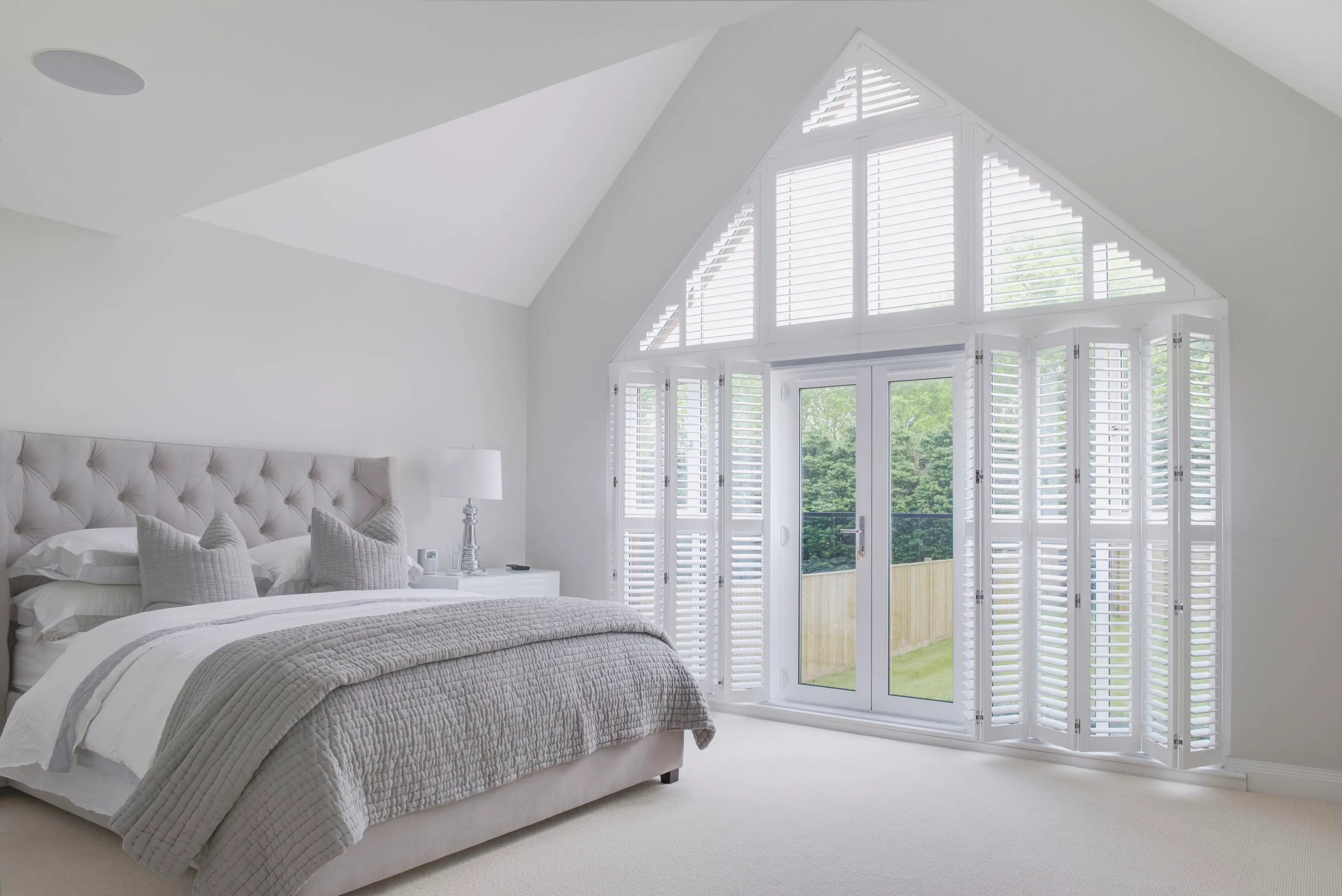
Bright bedroom with a large gable window fitted with white shutters, flooding the calm space with light and garden views.

When you’re choosing window dressings, the decision often starts with a simple question: curtains, blinds or shutters? But once you begin thinking about how a room is used, how much light it gets and how you want it to feel, that choice quickly becomes more layered. 

These are the kinds of conversations our advisors have every day when helping customers choose between different designs for their homes. 

There are lots of blind styles to pick from, but Venetian blinds and Wooden blinds are most often considered along with shutters because they share a similar structured look. With adjustable slats and clean lines, they shape light and privacy in a comparable way.  

While Venetian blinds, Wooden blinds and shutters all serve a similar purpose, they bring different qualities to a room. Some feel more flexible and easier to update, others have a more structured, built‑in feel. The right option is usually the one that suits the space, your style and your budget. Looking at each style on its own can help you make a decision that feels considered and comfortable to live with. 
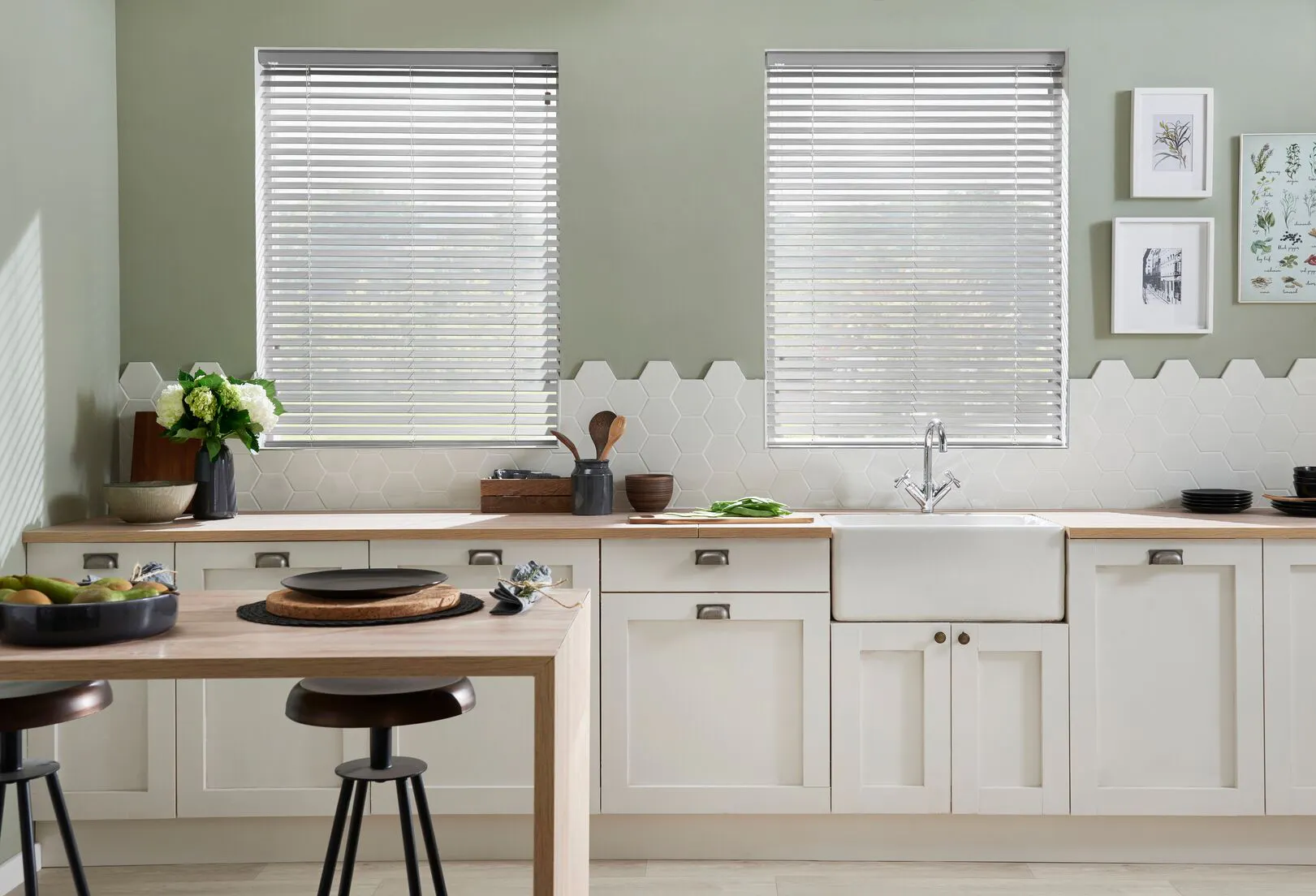
Bright kitchen with two windows featuring white venetian blinds, white cabinets, wooden worktops, and green accents with modern decor.

Venetian blinds and versatility

Venetian blinds remain a popular choice because they’re practical and easy to adapt to different rooms. Their slats allow you to manage light gradually throughout the day, helping spaces feel bright and open when you want them to, and more private when you don’t. 

That flexibility makes them especially useful in rooms where light changes often, such as kitchens, dining areas and home offices. A small adjustment can reduce glare, soften strong sunlight or give privacy in the evening, without shutting the space off completely. 

  • “Venetians have given us that privacy we really need, but not made the room look too small.” 

    Laura Taylor, Hillarys customer

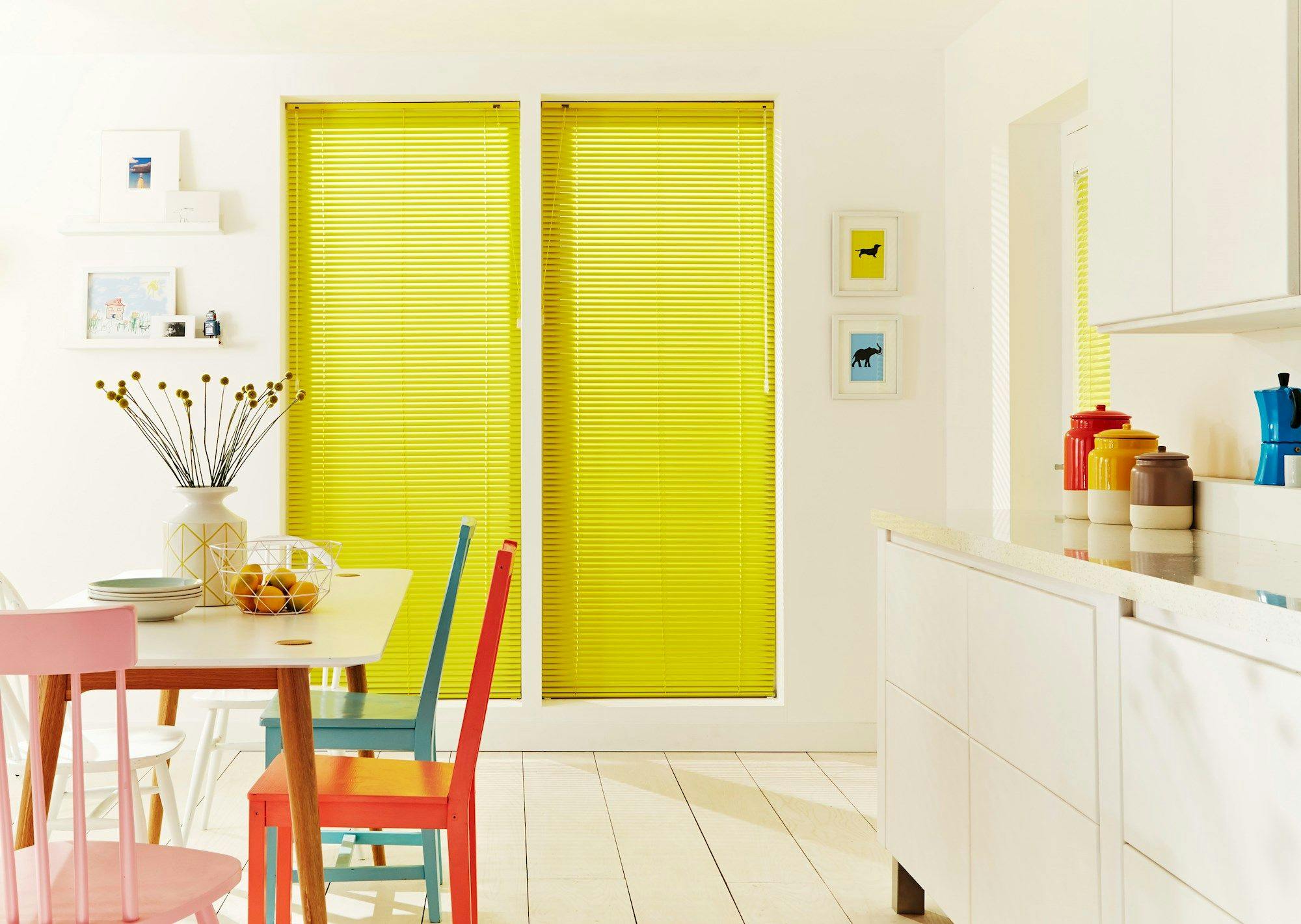
Yellow blinds cover large windows. A dining table with colorful chairs sits nearby, adorned with a vase of flowers and fruit bowl. Kitchen counter holds vibrant containers. White walls display framed art.

A budget‑friendly way to add colour and control

In terms of style, Venetian blinds offer far more choice than many people expect. Available in a wide range of finishes and colours, including bright and bold shades, they can either blend into a scheme or become a feature at the window. Whether you want something neutral or something that adds colour and contrast, Venetian blinds give you the freedom to decide. 

Venetian blinds are more budget friendly than Wooden blinds or shutters, which makes them an appealing option when you’re dressing multiple windows or making a quick update to a space. 

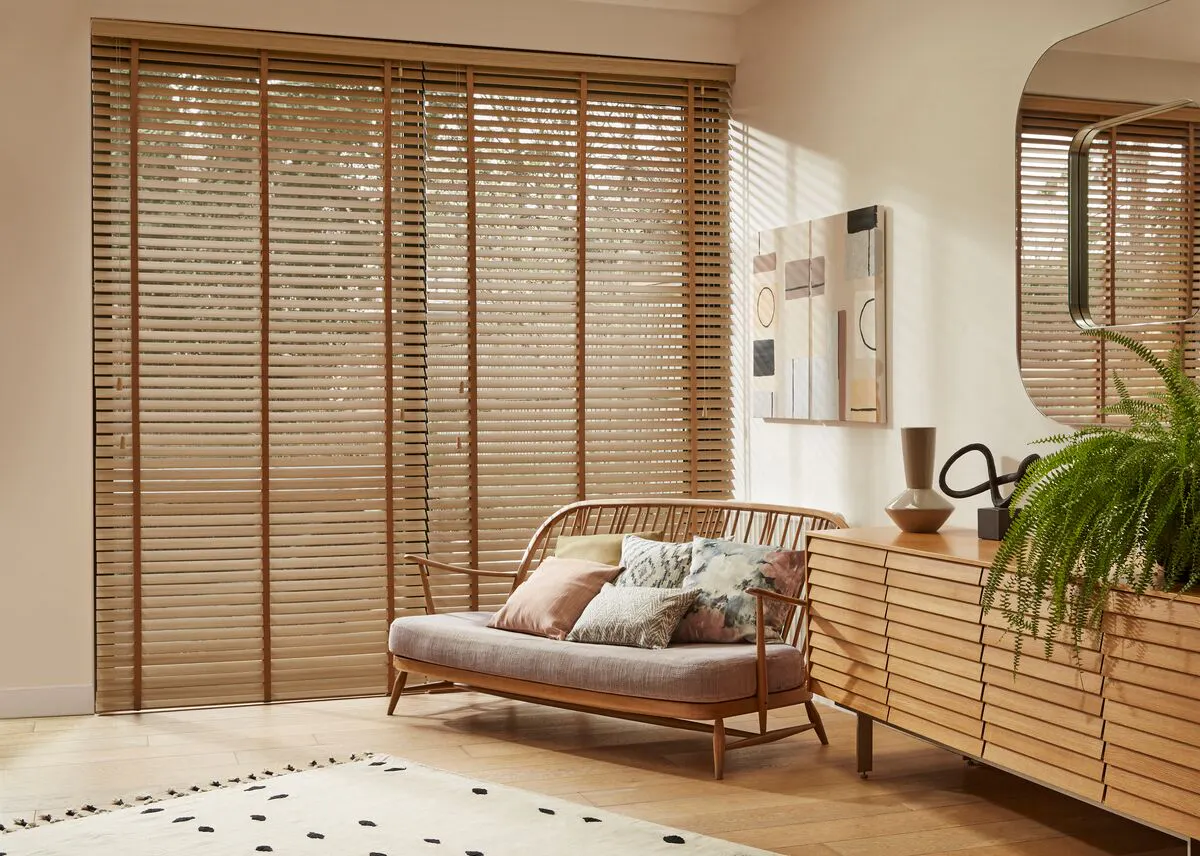
Living room with a wide window covered by a Wooden blind, casting warm filtered light across a rattan sofa and sleek sideboard.

Wooden blinds and natural warmth

Wooden blinds bring a different feel to a room. While they offer similar control over light and privacy, the texture of real wood adds warmth and depth that’s immediately noticeable. 

This makes Wooden blinds a popular choice in cosier spaces like living rooms, bedrooms and dining areas. Natural wood finishes work beautifully alongside other tactile materials, while painted Wooden blinds can look clean and tailored in more contemporary interiors. 

  • “Wooden blinds give such a timeless look. We decided to have matching blinds in the bedroom and living room because from the outside it looks really nice and cohesive.” 

    Gemma Gear, Interior stylist

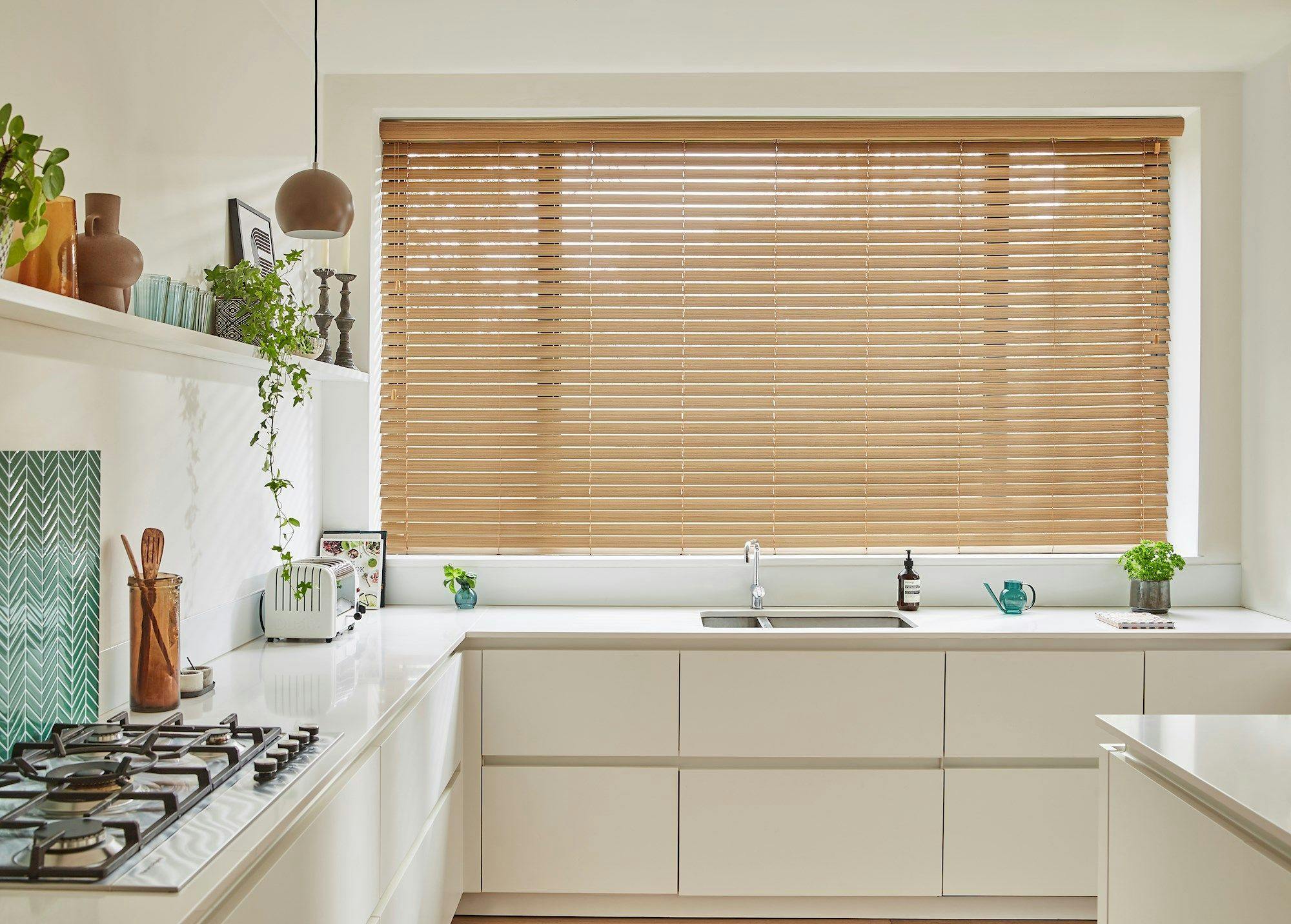
Wooden blinds cover a large kitchen window above a countertop. The bright kitchen features white cabinets, a sink, a stove, potted plants, and decorative items on a shelf.

Faux wood blinds for practical spaces

Faux wood blinds are a great option for those who love the look of Wooden blinds but need added durability. They’re often chosen for spaces where moisture, heat or frequent cleaning make real wood less suitable. 

Deciding between Wooden blinds and faux wood blinds often comes down to how the room is used. Living areas and bedrooms may suit the natural texture of real wood, while kitchens and bathrooms often benefit from the resilience of faux wood.  

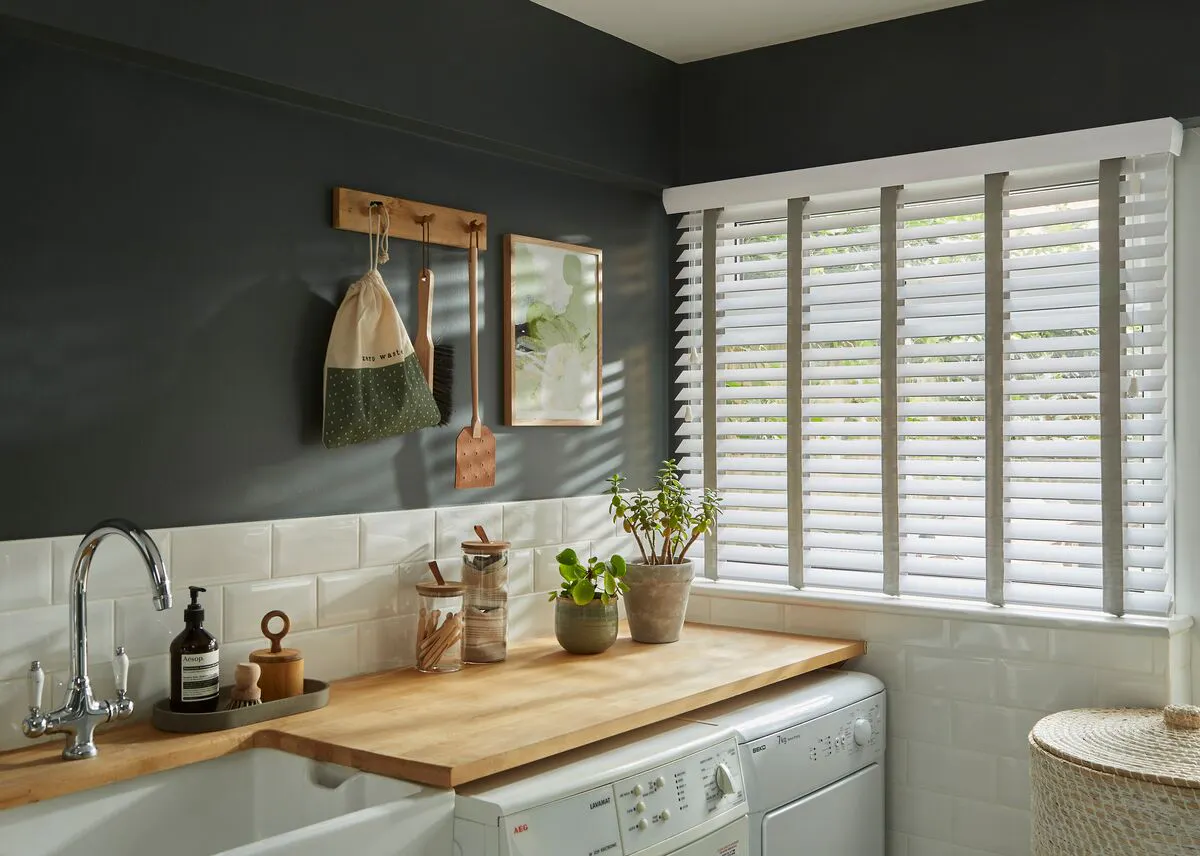
Cosy utility kitchen with a window fitted with white blinds, filtering soft daylight above a wooden worktop and tiled splashback.

Small details that refine the look

Both Wooden blinds and faux wood blinds can be personalised with subtle styling details. Decorative tape can be added to the ladders, running vertically through the slats. This softens the horizontal lines of the blind and creates a more tailored finish, with a gentle nod to shutter style. 

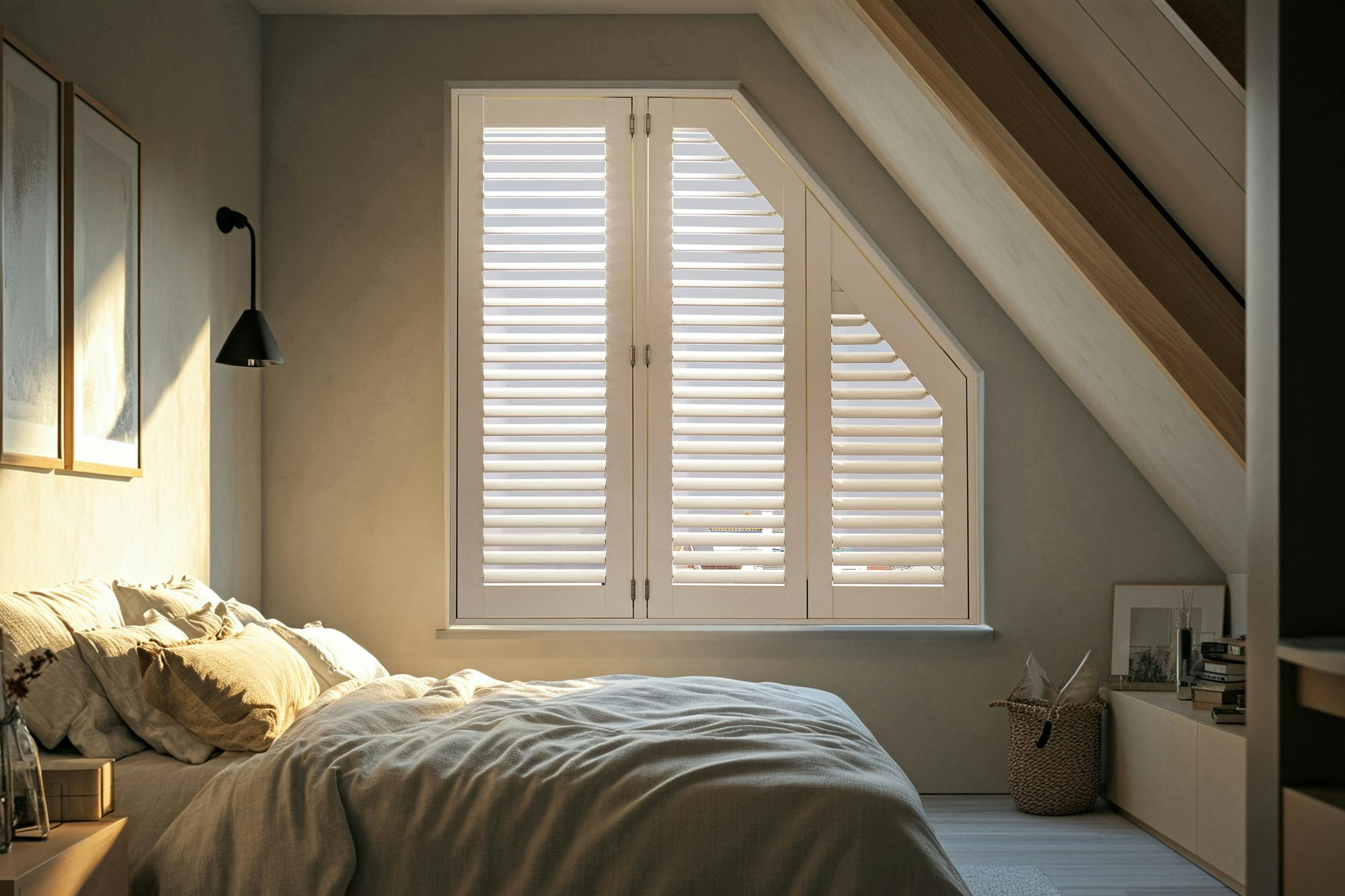
A shaped window with white full height shutters fitted to the window

Timeless good looks

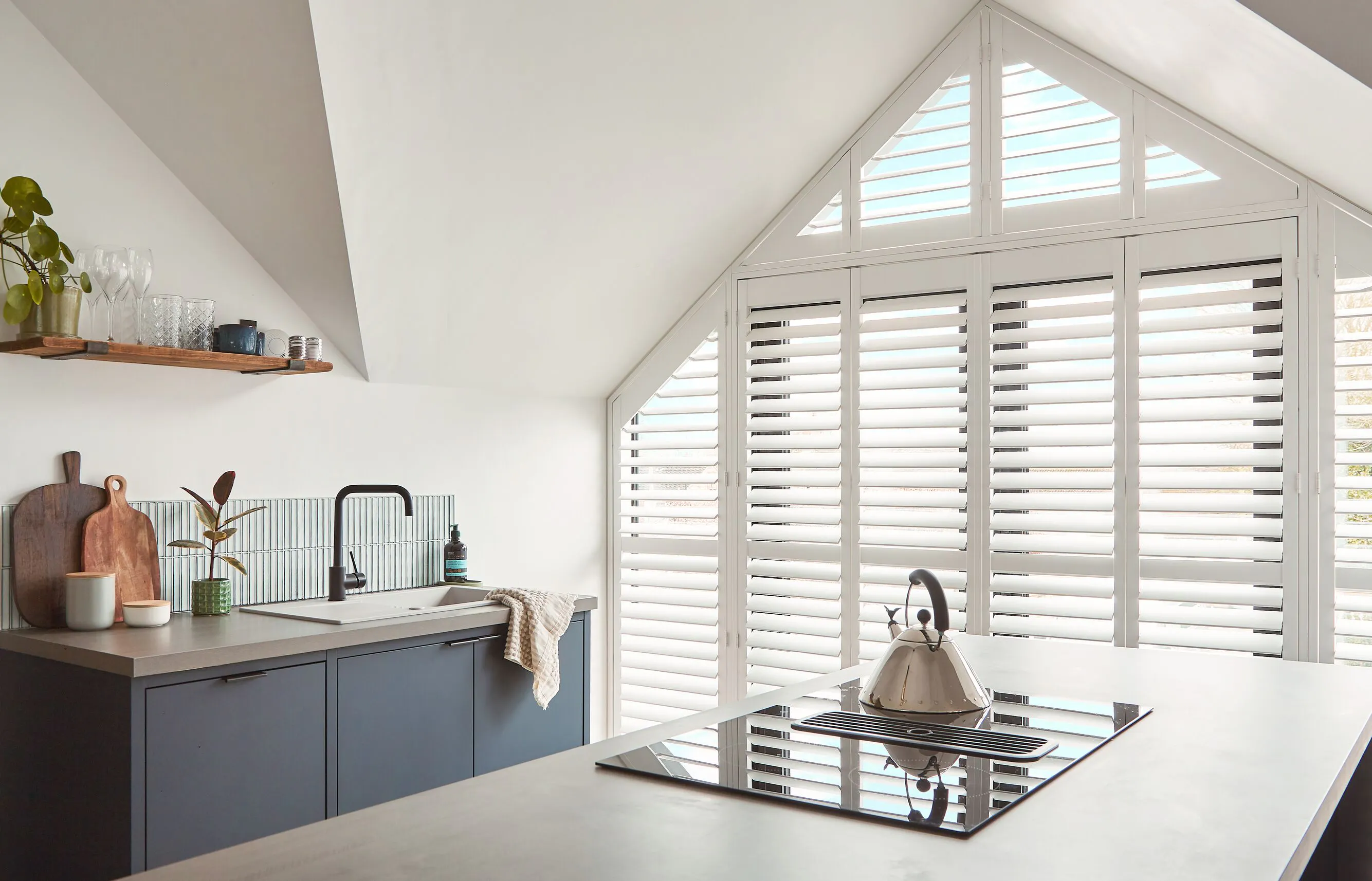
Shutters bring a timeless quality to a room. Fitted to the window itself, they create a framed, built‑in look that feels settled and intentional. This is a big part of their appeal. Shutters can make windows feel more proportioned and help a room feel calmer and more complete. They’re great for spaces where the windows are a focal point, such as shaped, gable end and bay windows. 

Because shutters almost become part of the window, they tend to shape the feel of a room as a whole. In period homes, they can sit comfortably alongside original features. In modern interiors, they add definition and balance.  

  • “I just love the classic look of shutters and I feel like they add a lot of kerb appeal.” 

    Luke Catleugh, Lifestyle content creator

Contemporary kitchen beneath a gable window with white shutters, letting gentle daylight wash across the worktops and hob.

Shutters for everyday living

For rooms that work harder day to day, such as kitchens, bathrooms and utility spaces, practical considerations naturally come into play. 

Water‑resistant shutter styles are designed to cope with humidity, steam and temperature changes, making them well suited to these environments. Their solid, structured finish helps practical rooms feel just as considered as living spaces. 

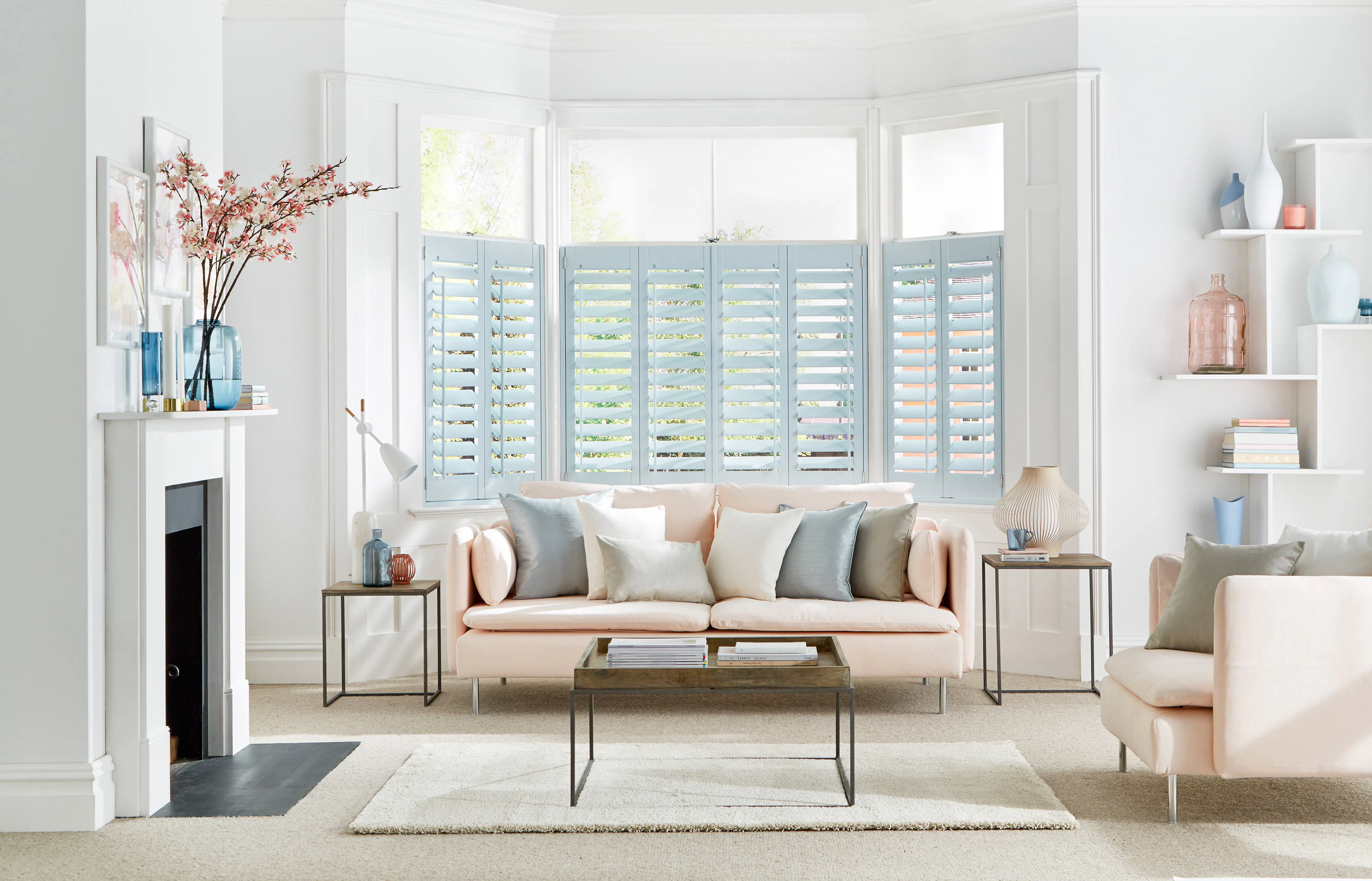
Light living room with a bay window fitted with soft blue shutters, framing the sofa and gently filtering daylight into the space.

Chic customisation options

Shutters stand out for the choice they offer in how they’re fitted and finished. Café style shutters cover the lower part of the window, giving privacy where it’s needed while still letting light in from above. Full‑height shutters create a more enclosed, built‑in look that can make a window feel more settled and complete. 

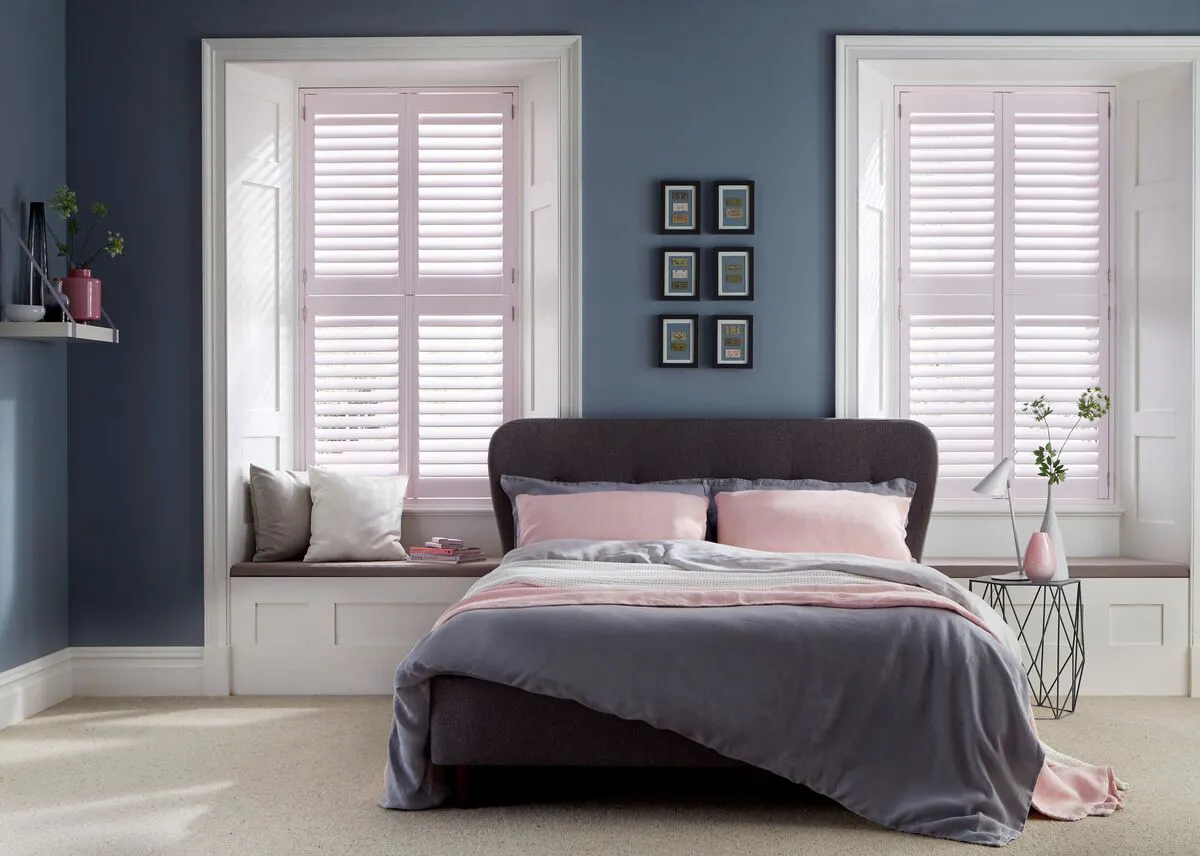
Colour adds another layer of choice. While white is a classic option, shutters can be colour matched to walls or woodwork, helping them blend in or feel more intentional.  

Thinking about investment

Shutters usually involve a higher initial spend than blinds, which is why they’re often seen as an investment. 

Their durability and timeless appearance mean they tend to age well as interiors change around them. This makes them a fantastic choice for those looking for a long‑term solution. 

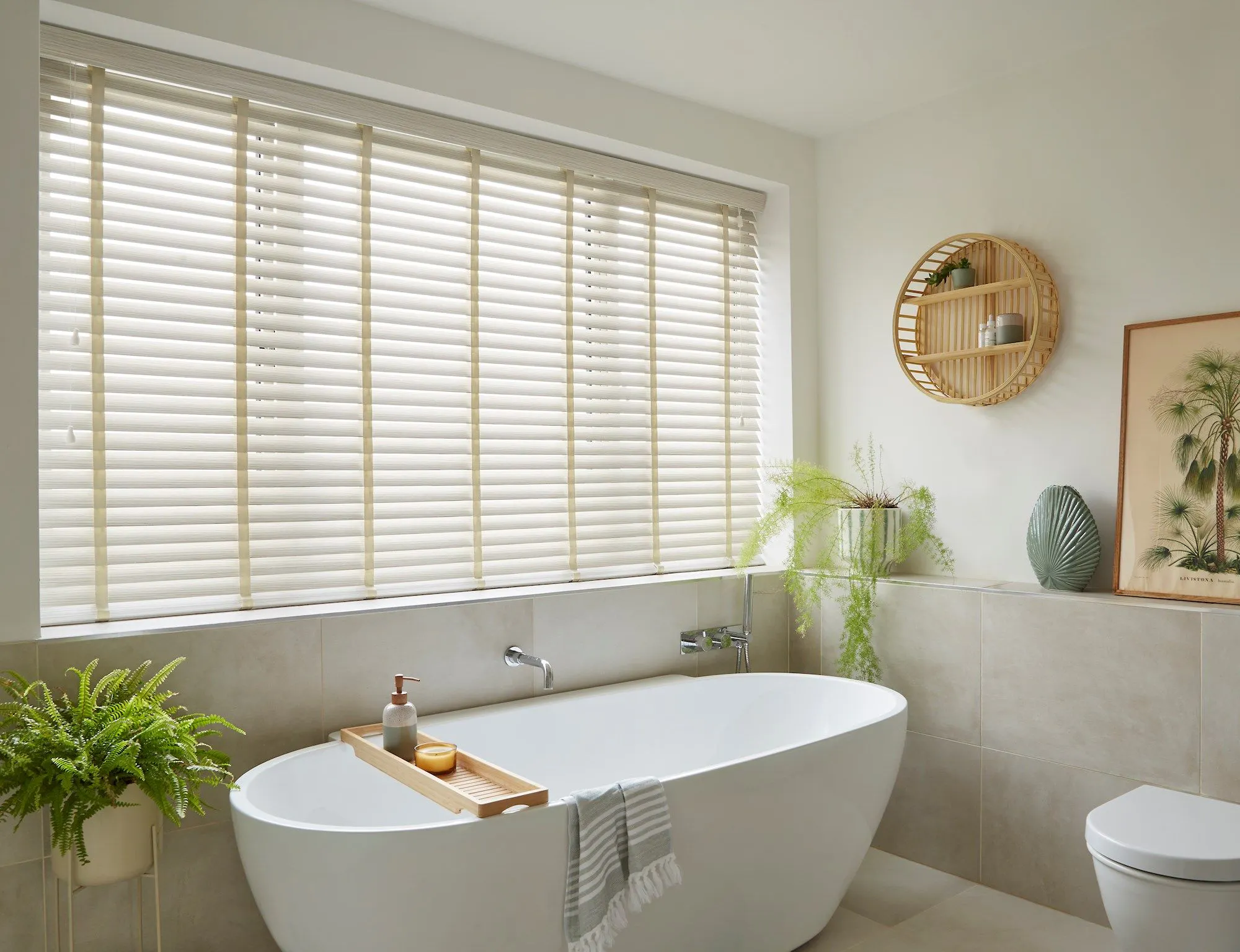
mirage faux wood granite venetian blinds in bathroom

Key takeaways

  • Venetian blinds offer flexible light control, wide colour choice and a budget‑friendly option.
  • Wooden blinds add natural warmth and texture to living spaces.
  • Faux wood blinds provide a durable, practical alternative to wood with a similar look.
  • Shutters create a built‑in, long‑term feel and can be colour matched to suit your scheme.

Finding the right balance for your home 

Choosing between wood styles, Venetian blinds or shutters doesn’t have to mean committing to one option throughout the house. 

Some rooms benefit from the affordability, colour choice and flexibility of Venetian blinds. Others suit the warmth of Wooden or faux wood blinds. Certain spaces call for the lasting presence of shutters. 

Looking at how each room is used, how visible the windows are and how much you want to invest will usually guide you towards the right decision. 

Related articles