
Request an appointment
  • Price Promise

  • Rated Excellent

  • Fully Guaranteed

  • Finance Options Available

Hillarys homepage0800 916 65240800 916 6524Request a brochureRequest an appointment

Why sleeping in the dark is the best for quality sleep

Author Jon Moore  Marketing and Ecommerce Director for Simba Sleep

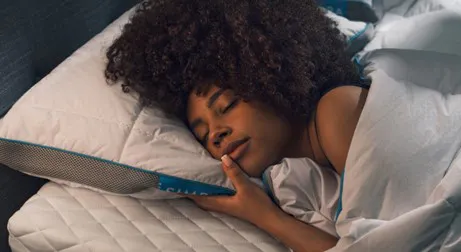
Lights off, covers on: the way every great sleep starts. But why is sleeping in the dark so much better for quality rest? And how do we tune out the light to tune into better sleep? Jon, Marketing and Ecommerce Director at Simba Sleep gives you all the answers you need. Plus, hear from Deputy CEO of The Sleep Charity, Lisa, for some extra expert advice.

Your body responds to rhythm

Light acts as a zeitgeber – which is ‘an external clue for your body clock that tells your body when it’s time to wake up’. Darkness works in the same way to start your body’s wind down process. If your eyes sense darkness at the same time each day, your circadian rhythm stays in check for more consistent sleep quality.

Get the light right

Quality rest relies on something called melatonin, which is a hormone our bodies produce to helps us fall asleep and, more importantly, stay asleep. Melatonin levels begin to rise 1-2 hours before bedtime, letting your immune system, sympathetic nervous system, body temperature and metabolism start rest and recovery. Production is triggered if you’re in dim light or darkness – which is why blue light can be so disruptive. It's recommended to surround yourself with minimal light interruption to stay asleep, including avoiding phones.

Children’s bedroom with blue Roman blind featuring stars and moons, matching bedding, and a white bedside table.

Deeper sleep starts in the dark

It’s not just your body that darkness has an effect on; Lisa maintains that ‘sleeping in a dark environment tells your brain it’s truly nighttime, allowing you to drift off more easily and experience higher-quality rest.’ It does this by stimulating healthy brain activity in your sleep cycle. Every night, you cycle through four stages, but darkness affects the two later ones most:

N3: Deep Sleep – The stage that’s essential for physical recovery, immune function and brain detoxing. Darkness settles you into this phase; light disrupts it and reduces the time you spend here.

REM Sleep, or the Dream Stage – Making up half your overall sleep time, you need this phase for emotional regulation, memory consolidation and creative thinking. Your brain has to have uninterrupted darkness to complete this stage, or sleep becomes fragmented.

Calming your mind, body and soul

If you’re calmer, you find it easier to fall asleep. Here’s how darkness plays a part: when your melatonin production is activated by darkness, activity in your sympathetic nervous system reduces, while activity in your parasympathetic nervous system (known as rest and digest mode) is boosted. It means your heart rate and breathing slows, your muscles and mind relax, and you’re ready for drift off.

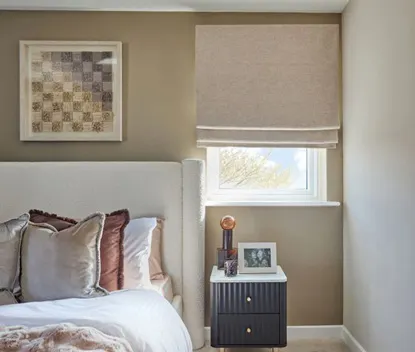
Bedroom with beige Roman blind on window, neutral walls, and a bed with layered cushions beside a small black bedside table.

Blocking out the light

To keep light from streetlamps, cars or early summer sunrises, Blackout blinds as your best bet. Made to measure styles ensure all light is shut out – whether you opt for Roller, Roman or Pleated blinds. For indoor light, use tape or draft excluders to block light from other rooms and electrical devices. To cover all your bases, grab an eye mask that’s soft and not too tight (like silk) to avoid irritation. And remember that light is as important for your circadian rhythm as dark, so open your blinds fully come morning.

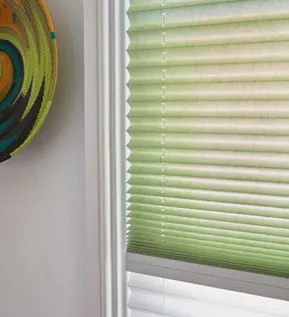
Close-up of green pleated blind on a white-framed window with a colourful circular wall decoration nearby.

Preparing your body for darkness

Sudden darkness doesn’t give your body time to increase melatonin levels, but gradually dimming light does. Like mimicking a natural sunset, you can do this by switching to warm lighting, using a sunset lamp, or using Transition blinds (or Day and Night blinds) to soften outdoor light. These things will give your body the signals it needs to drop into sleep, which makes limiting phone use right before bed essential. That’s because the blue light from our midnight scrolls is mistaken by our brain for daylight, which heightens brain activity, suppresses the production of melatonin and affects your body’s circadian rhythms. Instead, stop the use of screens an hour before bedtime and keep electronics out of the bedroom.

Calmy does it

It’s not just darkness that prepares you for restful slumber: anxiety, stress, and depression can unfortunately cause insomnia, meaning encouraging calm before bed is crucial. Relaxation techniques – like progressive muscle relaxation, soothing scents or a warm bath can help with feeling calm and activate your parasympathetic nervous system. Enhance your sleep environment to feel supportive and comfortable with Simba’s plush mattresses, like the Hybrid® Luxe, cocooning duvets and cloud-like pillows..

Darkness is the key to a great sleep, whether it helps you drift off easier or keeps you sleeping soundly. Bringing more into your sleep setup could be all you need to give your sleep quality a boost; from creating your own light-to-dark routine to picking out new Blackout blinds, the journey to better sleep has never been more fun.

Looking for more inspiration?